Friday, March 21, 2014

The Last Runaway by Tracy Chevalier


Hardback:  343 pages
Genre: Literary Fiction
Publisher:  Harper Collins 2013 

Source:  Tywyn Public Library, Wales.
First Sentence: She could not go back.

Favourite Quote: “I have a bed and enough to eat and kind people about me. God is still with me. For these things I am grateful and have no reason to complain” 
Review Quote: ‘Chevalier immerses herself in period and place. Her research, as always, is meticulous and lightly worn… an entertaining read’ THE GUARDIAN
My Opinion: 
 Absorbing to read but not because of the characters or the plot.


I have enjoyed all the novels by Tracy Chevalier that I have read previously finding them compelling but all in entirely different ways. 'The Last Runaway' is no exception, however in reading this novel I found that the descriptions of the countryside, quilting, hat-making, pioneer towns and how runaway slaves escape are more powerful than the storyline. Tracy Chevalier has certainly done her homework and the novel was absorbing to read but not because of the characters or the plot.

Young Quaker Honor leaves mid 19C England with her sister who is to marry in Ohio, USA, unfortunately her sister dies en-route and she finds herself completely alone in a foreign country, forced to rely on strangers. Circumstances force her to make a new home for herself, despite the fact that mostly she feels she is not welcome amongst the people who have taken her in. She does eventually settle and marry and thorough the only real friend she has made she gets involved with the 'Underground Railroad'  a network of people that helped runaway slaves who were trying to find freedom in North America or Canada. This was illegal and despite Quakers being anti-slavery they shied away from involvement due to the heavy fines if caught. The Quaker family she had married into were far more concerned about quilts and appearances than these poor people! Honor had a hard life surviving in this new world but survive she did. 

In conclusion it was an interesting read in that I learnt about life in 19C Ohio, Quakers, Quilting and Slavery in an easy and quick read. Should appeal to anyone interested in any of the aforementioned subjects and those already fans of Tracy Chevalier.


Of the Tracy Chevalier novels that I have read previously The Virgin Blue and Falling Angels are the only ones I have published a review on-line for, the links will take you to my Bookcrossing entries.


                                         Tracy Chevalier speaking on BBC Breakfast about The Last Runaway


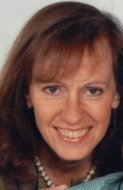
Author Profile


Tracy Chevalier was born on 19 October 1962 in Washington, DC. the youngest of three children.  She describes herself as a 'nerdy' child that spent a lot of time lying on her bed reading. Favourite authors back then were Laura Ingalls Wilder, Madeleine L’Engle, Zilpha Keatley Snyder, Joan Aiken, Susan Cooper, Lloyd Alexander and L.M. Montgomery.

She graduated from Oberlin College, Ohio, USA in 1984 with a BA in English and in 1994 an MA in Creative Writing from the University of East Anglia, Norwich, England. 
Having lived in the UK since 1984, she now has dual citizenship, an English husband and son.

Before becoming a full time writer Tracy worked as a reference book editor, working on encyclopaedias about writers. Having talked a lot about becoming a writer as a child, she started writing short stories in her twenties, then began first novel, The Virgin Blue, during her MA year. Since writing  Girl With a Pearl Earring  in 1998, she became a full-time writer, and has since divided her time between  motherhood and writing.

Whilst researching for the Author Profile for Tracy Chevalier I came across a very interesting post on her website, written just this month. For her research for The Last Runaway she was drawn into the world of quilting which has surprisingly since led her to visit a prison cell. She is curating a quilt/art show for Danson House, a Georgian Mansion outside of London, which opens in April 2014. It opens next month. One of the pieces for the exhibition is a quilt Ishe commissioned from the UK charity Fine Cell Work, who teach prisoners how to sew, embroider, and do needlepoint. If you are interested in learning more please do visit the link to Tracy's website.  Quilting Exhibition.

The biographical information and photo used in this post are with thanks to the following websites, where you can also find more information about the author and her writing. 

Goodreads Author Profile - Tracy Chevalier  Amazon Author Profile    Twitter - Tracy Chevalier


Tracy Chevalier - Wikipedia    YouTube - The Last Runaway   Facebook Page - Tracy Chevalier

Sharing with Literary Friday

Monday, March 17, 2014

The Jarrow Lass (Trilogy) by Janet MacLeod Trotter


Ebook: 1745 KB (Print length 1197 pages).
Genre: Historical Fiction.
Publisher
MacLeod Trotter Books (ebook 2011)First published 2001.
Source: Amazon Purchase - Kindle.
First Sentence: Rose clung on to her grandmother's gnarled hand, terrified of being swept away by a sea of dresses and buffeting legs.

Review Quote: 'This is a powerful and compelling saga'  Bolton Evening News.
My Opinion: A gripping historical family saga.


Janet MacLeod Trotter is an author that I had never considered reading until my daughter purchased this trilogy for Kindle. I was surprised as not the sort of thing that I would have expected to appeal to her, in fact she thoroughly enjoyed the saga and recommended that I read them. Intrigued especially when I  learnt that the story was inspired by the life of Catherine Cookson, the trilogy seemed a good choice for a holiday read. 

A gripping and historical family saga that spans the late 19C and the first half of the 20C with admirable heroines. Slow to start with but once I was immersed in the trials and tribulations of the family, I just wanted to keep reading. Ended up reading all three volumes, one after the other as savoured the insight into life during that period.

Survival against all odds is the recurrent theme throughout the trilogy as we follow the stories of love and sorrow through the eyes of the three female heroines and their families. The Jarrow Lass, the first in the trilogy introduces us to Rose, growing up on a small holding in Jarrow in the 1870's but dreaming of a better life in the country that she once glimpsed as a child. She thinks her dream might be in reach when she marries a steelworker, but tragedy strikes and poverty threatens. 
The protagonist of the second volume A Child of Jarrow  is daughter Kate who to escape problems with her step-father is sent to work in the countryside on the Ravensworth Estate. Kate soon settles into her new life but sadly finds that daring to dream leads her into trouble and she has to return home to Jarrow, where life is even more difficult to cope with.
Return to Jarrow concludes the trilogy with the story of Rose's granddaughter Catherine, though always know as Kitty. Streetwise Kitty is very bitter about her mother Kate's new husband and she is determined to escape life in the poverty stricken north east. Despite being teased by her contemporaries uneducated Kitty turns herself into an educated well spoken young lady called Catherine. Romance, heartbreak and deprivation pave the way as this spirited young lady sets off to follow her ambitions.

The trilogy was indeed a good choice for my trip. The style of writing was in fact reminiscent of Catherine Cookson whose novels I read some of in the dim distant past. Fans of Catherine Cookson in particular and those of historical fiction in general will I feel enjoy this saga. A good choice for your eBook reader for your next holiday, personally for me Ebooks will never replace the printed page but as an avid reader packing enough paperbacks for a holiday was always a nightmare! 


Author Profile


Born to Scottish parents, Janet grew up in the sixties in North East of England, where she now lives with her husband and two children. Janet has been a published writer since the mid 1980's and has a broad range of writing experience from adult historical novels, short stories, children's writing, newspaper columns, articles and TV reviews.  She has had 16 novels published, 12 of them historical sagas set in the North East. 


Read a fuller biography @ Janet McLeod Trotter 


The biographical information and photo used in this post are with thanks to the following websites, where you can also find more information about the author and her writing. 


Author's Official Website   Janet McLeod Trotter - Blog    Facebook Page    Amazon Author Profile


Friday, March 7, 2014

Silent Tears: A Journey of Hope in a Chinese Orphanage by Kay Bratt


Ebook: 370KB 354 pages in print edition.
Genre: Personal Memoir
Publisher
Lake Union Publishing (30 Mar 2010)
Source:  Amazon
First Sentences: Prologue: Her dainty hands were numb from too many hours sitting outside under the bridge.

My Opinion: Great material but disappointingly presented.


Oh dear, I am just not sure about this memoir, I probably would not have chosen to read this if I had picked up the paper back copy in a bookshop or a library. As it was on my Kindle, my daughter's choice and I was in China at the time, it seemed an appropriate choice to read. There are good and bad points about this memoir and for the good points it is readable. The upside is that as a factual although distressing memoir of an American ex-pat in China chronicling her time helping in a orphanage, it is an eye opener. Worthwhile reading then for subject matter but when it came to the writing style it just not seem to flow properly and it felt very repetitive at times.


Written in journal style format Kay Bratt chronicles her time in China giving us an insight into how life is for an ex-pat in China. We read how different the role of a Chinese child is within the family and what happens to the many orphans that are victims of this system. The author's viewpoint can at times be difficult to connect with as her unhappiness comes out in her writing, making her sound like she was moaning about her lot much of the time, which I am sure she was not doing really. She just felt drained by the horrendous scenes she witnessed whilst working at the orphanage, trying to help improve the conditions, but feeling she was getting nowhere. In fact she achieved an amazing amount. Maybe it is also worth mentioning that this was back in 2003 that the Bratt family were relocated to China and surely Chinese orphanages have improved since then. One certainly hopes so and I believe that Kay Bratt is continuing to support the plight of children in China.

This book will certainly give you something to think about and the descriptions will linger in your mind. How can this sort of thing be happening in modern society? A harrowing subject that we should all be made aware of, if it does nothing else it will make you appreciate how lucky we are in this part of the world.


NOTE:

If you have time please read the information I have included in the author profile from the author's website as I feel it will highlight what this lady has done for Chinese orphans. She may have struggled to put her feelings into print in the memoir as I have reviewed but that does not mean she was not dedicated to the cause. 


Author Profile


Kay Bratt is a child advocate and author, residing in the foothills of the Blue Ridge Mountains in South Carolina with her husband, daughter, dog, and cat. Kay lived in China for over four years and because of her experiences working with orphans, she strives to be the voice for children who cannot speak for themselves. She is currently an active volunteer for the non-profit organization called An Orphans Wish (AOW). I read on her website this organisation closed down at the end of 2013, so not sure how she is continuing with her support.


Biography of Kay Bratt, in her own words, courtesy of her website

As I sit outside my American home enjoying the many stars in the sky and comfortable summer night, I can’t help but feel as if the last five years in China was but a dream. Did I really become an insider to a place only few outsiders are allowed? Were those memories of holding unkempt but dear children in my arms real? I know my mind would like for me to forget the many small faces I knew, but my heart will never allow it. In my sleep, I pace up and down those familiar halls of the orphanage, calling out to the ghost-like children. They hover near but never close enough to touch. During my hours of unrest, I wonder what they are doing at that same moment and marvel that our lives are now like two different worlds. Do those left behind remember me or wonder why I haven’t returned? Or to them, am I just another person in their life to abandon them and move on?


For the four years my family lived in China as an expatriate family, I was a Meiguoren Mama (American mother) to many at the gueryuan (orphanage). Because the directors looked forward to what monetary gifts our team of foreigners could bring in for the facility, they allowed us into their midst for limited hours each day. For me, it was a chance to fulfill a dream I’d always had of working with children. My team of women from all over the world— in China for the same reason as I, to accompany their husbands during their international work projects— nurtured some who would not make it past their first year, or even their first month. I struggled to show by example the way a child should be cared for and silently pleaded with the staff to follow my lead. I bonded with many nannies and felt remorse for the resentment I felt towards them when they were only trying to do their job and make it through their not-so-lucky lives. It didn’t take me long to become smitten with children who were not mine, to desire for them the things I would want for my own; a future and a family who would love and protect them. In my tenure, many children found that home and went on to live with their forever families—but many did not and I was determined to make their lives as comfortable as possible in the circumstances that fate had dealt them.
How many times my sadness was bottled up inside me, only allowed to be released after I left the institution grounds, so I would not jeopardize my precarious position as a foreign volunteer. As my time there in the ancient but modernized city grew long, I came to realize many truths. I became educated on the harshness of reality in an orphanage. It started to make sense to me why the nannies strap the babies into their beds during the cold, winter months. I finally understood the lack of emotion they showed as they handled each child for a feeding or bath. I felt the desperation they felt at the heaviness of the poverty that surrounded them like cloaks.
I could empathize but still felt driven to make changes—and make changes we did. With the support of a few non-profit organizations, but mostly from concerned foreigners living in the Chinese city as expatriates, we were able to make many contributions to the care of the children. Gone was the row of beds that held fragile infants who were deemed no longer worth feeding. Gone was the pitiful rags used as diapers. Gone was the exhaustion of the nannies that were caring for too many bodies with too few hands. Gone was the feeling of oppression that had pervaded every corner of the over-crowded rooms of children. In time, I started to see small touches of affection some of the nannies demonstrated covertly. I learned there is hope in every circumstance. I learned never to judge someone until you have walked a mile in her shoes. What I ponder now is how many more institutes need a helping hand or an understanding nod. What will it take to convince them to grab the olive branch we are offering?
How does it happen that one tall, blonde American walks through the gate of a Chinese orphanage and integrates so smoothly that she is treated as one of the staff? How does she and her team work their way under the frustrating red tape to pull many children through the cloud of impending disaster? I never intended to write a book about my experiences. Before now, I only shared what I’d experienced with a chosen few. However, in time I came to believe that a first-hand account of what really goes on beyond those mysterious walls can only benefit the children—perhaps convince institutions to make changes. I call my story A Journey of Hope. In the dictionary, hope is described as such: A desire of some good, accompanied with an expectation of obtaining it, or a belief that it is obtainable. It is that definition of hope that kept me returning to the children year after year. I hoped that in the end, we could change the environment from one of institutional life to one of a loving children’s home. It is my wish that my story will bring inspiration and awareness to many people around the world, perhaps prompting them to contribute in some way to children in need.
The biographical information and photo used in this post are with thanks to the following websites, where you can also find more information about the author and her writing. 

Amazon Author Profile    Twitter Profile - Kay Bratt    Goodreads - Author Profile


Facebook - Kay Bratt     Kay Bratt -Official Author Website


Linking with Literary Friday


Tuesday, March 4, 2014

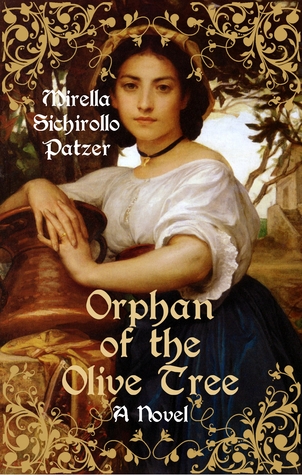
Orphan of the Olive Tree by Mirella Sichirollo Patzer


Ebook: 809 KB Print Length 432 pages.
Genre: Historical Fiction
Publisher:  
Historical Fiction by History and Women Press, December 2013.
Source:  The author in return for an honest and unbiased review.
First Sentences: "Look out behind you, Enrico!" The warning shout arose over the howls and bellows of men in the violent throes of battle.

Review Quote: Mirella Sichirollo Patzer's novel, Orphan of the Olive Tree - Historical Romance Saga, is skillfully plotted and provides a tasty dish of jealousy, revenge, unrequited love, rebellion, loyalty, superstition, and sheer, wicked spitefulness...Ms. Patzer is a truly fine writer. She has it all down - dialogue, plotting, descriptive power, and characterization. IndieHeart.com 
My Opinion: A delightful read.


What a delightful read this was, a well researched novel set in 13C Italy. I love Italy and found that the author really managed to evoke life during the medieval period when life was full of superstition. The storyline takes many twists and turns in this entertaining novel of secrets, lies and treachery.

Best friends Enrico and Carlo are so close that they betroth their first born children to wed each other, long before they have families. Living in the Tuscan countryside near Siena, the two families are neighbours, Enrico and his wife Felicia, Carlo with his wife Prudenza.  Despite their husbands friendship the two women do not get on with each other, they are vastly different in character.  Felicia has no family apart from Enrico and asks for nothing more than to raise a family, whilst Prudenza is very materialistic and envious of the wife of her husband's friend. An envy that is all consuming and damaging to all around her.  It does not prove easy for either woman to conceive to fulfil their husbands wish, but eventually both women give birth to twins. Felicia gives birth first and it is Prudenza's jealousy that makes her spread an old superstition, that ruins her neighbours reputation and marriage. It is somewhat ironic when Prudenza herself also gives birth to twins and has to make a dramatic decision, one that will catch up with them all eventually. The truth has a way of outing itself eventually!

I can recommend this to any reader that enjoys historical fiction and the fact it is set in Italy means that this passionately written novel will probably also appeal to many Italophiles.

Previously read and reviewed on LindyLouMac's Book Reviews.  The Pendant by Mirella S. Patzer


Author Profile

Mirella Sichirollo Patzer writes sweeping historical novels set in exciting periods of history. From the medieval eras to the early 18th century, her novels feature intriguing characters and fascinating heroines. Her favourite setting is Italy, for that's where the root of her passion lies because of her strong Italian heritage, but she has also written about early Canada and medieval Germany. As well as writing historical fiction she is also an avid reader of the genre.

First generation Italian/Canadian, Mirella was born in Edmonton, Alberta, Canada, but grew up in Calgary, a city famous for the Calgary Stampede, oil companies, and the wild west. She attended the University of Calgary where she specialized in leadership and human resources. She has worked as a bilingual secretary, police radio operator, and manager. She loves a clean orderly house but hates housework, detests winter, and is a mild claustraphobic. She has a passion for books, cooking, writing, and a good helping of her home-made tira-mi-su. She lives in Cochrane, Alberta, with her husband and family.

The biographical information and photo used in this post are with thanks to the following websites, where you can also find more information about the author and her writing. 


Twitter - Mirella Patzer   Author's Blog - History and Women  Goodreads - Author Profile

Amazon Author Page       Mirella Sichirollo Patzer - Historical Fiction Author     Facebook Profile