Showing posts with label WWI. Show all posts

Friday, March 31, 2023

A Touch of Paradise in Hell by Jan Louagie


Hardback:  388 pages                                                                                                

Genre: Non-Fiction, History, WWI

Publisher: Helion and Co Ltd.

Source: Personal Copy

Setting: Poperinge, Belgium.

My Opinion

My partner and I purchased a copy of ‘A Touch of Paradise in Hell’ when we were visiting Poperinge last summer. Originally published in 2015, reprinted in 2020, it is a fascinating history of a very special place, Talbot House in Poperinge, Belgium.


Having now read in full I can assure you that having visited for ourselves, the book conveys the atmosphere extremely well. Through the medium of letters, anecdotes and illustrations you will gain a good understanding of its ethos.


If you have an interest in WWI history or just want to learn more about a period in history you know little about, I can highly recommend reading this. Even better if you can read the book and visit Poperinge for yourself it is worthwhile. We were fortunate to have visited during a tour of Belgium and had we known in advance, we could have even stayed at Talbot House as it also operates as a Guesthouse.  


Précis Courtesy of Goodreads:

Away from the turmoil of battle in the Ypres Salient, the town of Poperinge developed into the nerve centre of the British sector. In the heart of this bustling town, the Army Chaplains Philip ( Tubby ) Clayton and Neville Talbot opened an Every-Man s Club . It was an alternative place of wholesome recreation where all soldiers, regardless of their rank, were welcome. The inspired way in which Tubby ran this home from home , turned Talbot House, or Toc H , into the best-known soldiers club of the British Army a sanctuary for half a million men on their way to or from the Front.The first part, Portrait of an Every Man s Club, paints a graphic picture of Talbot House against the immense background of the waste and horror of war, from its early beginnings at the end of 1915 till the private owner s return early in 1919. The connecting thread is provided by a wide selection of Tubby s letters, mostly to his mother. These are supplemented with extracts from his diaries and other wartime writings, as well as letters and accounts from dozens of other eyewitnesses. Together they provide an intimate, vivid and complete picture of what life at the House was like. They give us a fascinating insight into the lives that Tubby and his guests were living, the kind of thoughts they were thinking, and the visions, hopes and ideals that gripped their minds. Indeed, they tell the authentic history of Talbot House. In the second part, A Home from Home, Tubby shows us around the House so that we get a clearer picture as he passes from room to room, from the lively and noisy gaiety in the canteen to the peace and serenity in the chapel. This guided tour is flavoured with recollections of some 40 officers and other ranks relating how they experienced the unique atmosphere radiating from the various parts of the remarkable building. In A House of People, the focus is first put on the Padre and his batman, Private Arthur Pettifer. Then follows a colourful palette of stories by the innkeeper , each about one particular customer who, for one specific reason or another, stood out in his experience. But also a number of Talbotousians have a tale to tell. Browsing through their memories, five of them relate a significant incident that will forever be associated with Talbot House or Tubby. The final chapter takes us beyond the walls of the Old House. In a few poignant sketches it describes Tubby s visits to his parishioners in the slums of warfare. It portrays the comradeship of shared experiences, the excitements and the miseries, and the triumph of the human spirit over unimaginable suffering. Some rare reminiscences of the short-lived and much-tested daughter-house in Ieper complete the picture. The appendices, all wartime documents produced at Talbot House, shed further light on its early history, management and day-to-day working. "A Touch of Paradise in Hell" can not only be enjoyed by the reader at home but also can be used as a guidebook during a visit to Talbot House and serve as a Talbot House guide to the Ieper Salient and the Somme, as it links people and stories to locations. The annotations contain a wealth of interesting background information. Contains 203 b/w & 68 colour photos, & illustrations

Author Profile:
 
                                                  
                                          Courtesy of OldTalbotHouseFoundation.

Jan  has been working with Talbot House for most of his life and is the House's historian and Secretary to the Talbot House association.


Photographs and Biographical Information courtesy of the following sites.


Thursday, May 21, 2015

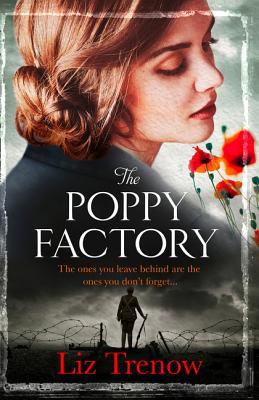
The Poppy Factory by Liz Trenow


eBook: 118 KB 402 pages
Genre: Historical Fiction
Publisher: Avon 2014
Source: Amazon Kindle
First Sentence: An uneasy silence fell as the plane lurched bumpily around a spiral holding pattern above Heathrow.

My Opinion: Captivating.


As this is the third novel written by this author that I have read and enjoyed in the last three years, I feel I should call myself a fan, certainly I will be looking out for new titles in the future. All three titles are full of poignancy and emotion, they also feel very realistic as Liz Trenow's attention to the historical details is meticulous. The Poppy Factory is just as captivating and well researched

The two female protagonists Jess and Rose, come from such different worlds, a hundred years apart but some things never change as Jess, a veteran of the conflict in Afghanistan discovers when she reads the diaries her great grandmother Rose wrote during the First World War. For both these young women the horrors of war had tragic repercussions, shell shocked and wondering if she will ever be able to cope with 'normal' life again Jess finds solace in the diaries where Rose had poured out her heart all those years ago. 

It is fitting that this novel was released last year, 2014, in the hundredth anniversary year of World War I. A story of the life of the women left behind and the struggles they have to overcome, when their men go to war. Recommended reading for anyone that wants to learn more about the lives not just of our ancestors during World War I but of those that have fought in recent conflicts. 


The following links will take you to my reviews of Liz Trenow's previous novels.

The Last Telegram     The Forgotten Seamstress


Author Profile


 Liz Trenow's family have been silk weavers for nearly three hundred years and she was born and brought up in a house next to the family silk mill. Her father and later her brother, went to work each day at the mill, silk therefore played a large part in her early life, though at the time she did not really appreciate this fact.
As a student she did a range of holiday jobs in the mill but, like Lily in The Last Telegram, the business held no real romance for her. What she really wanted was to become a journalist so, after a few years teaching skiing in Canada, she became one. Working in news and features for local and regional newspapers, as a news journalist for local radio and regional television, also at BBC Broadcasting House and Television Centre, before leaving to work in PR which had much more family-friendly working hours!  After fifteen years working she then started to write full time. She lives in Essex with her sculptor husband, and has two grown-up daughters.
The silk company has a long and distinguished history which had never been recorded, so I started to research it with the intention of writing a book, but work, marriage and family took precedence in my life and the research languished in a file. As her parents reached their eighties, she realised there might not be much time left, so started recording conversations with them, individually and together, about their extraordinary lives. During one of these conversations, her father mentioned that during the Second World War what kept the mill going were contracts to weave silk for parachutes, surgical dressings (silk has amazing antiseptic properties) and electrical insulation (plastic had not been invented). He also told me how tricky it had been getting the porosity of the fabric just right for parachutes. It was after learning these facts that the idea for a novel was born, but it was only after retiring from full-time work and taking an obtaining an MA in Creative Writing at City University London that she actually started writing her début novel 'The Last Telegram'

The biographical information and photo used in this post are with thanks to the following websites, where you can also find more information about the author and her writing.


Goodreads Author Profile   Amazon Author Profile   Liz Trenow - Twitter 


Liz Trenow - Author's Official Website


Thursday, January 22, 2015

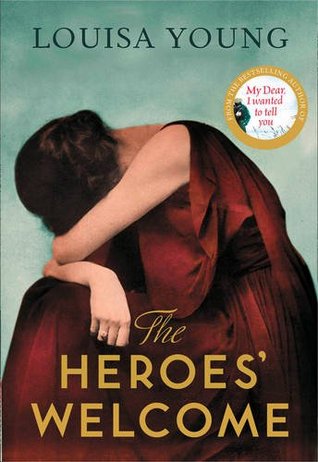
The Heroes' Welcome by Louisa Young


Hardback: 260 pages
Genre:  Historical Fiction
Publisher: The Borough Press, Harper Collins Imprint. 2014
Source: Tywyn Public Library
First Sentences: Riley Purefoy did not think very much about the war. He didn't have to. It was part of him. 
Review Quote: ‘Powerful, sometimes shocking, boldly conceived, it fixes on war’s lingering trauma to show how people adapt – or not – and is irradiated by anger and pity’ The Sunday Times
My Opinion:  A moving account of the after effects of the First World War.


The latest choice for a book club I belong to Louisa Young is an author I had not come across before, so I had no idea that 'The Heroes Welcome' is a sequel to 'My Dear, I Wanted To Tell You'  Had I perhaps known this beforehand I would have made the effort to read this first, as I do feel it would have given me more insight into the background of the main characters who all appeared in the first novel.  'The Heroes Welcome' does however stand alone as a moving account of the after effects of the First World War. 

The story is indeed a very depressing one as it follows the attempts of the main characters Nadine, Riley, Julia, Peter and Rose to come to terms with all that they have suffered. Starting on a happy note, it is the Spring of April 1919 and Nadine Waverney marries her long-time sweetheart Riley Purefoy. Riley is badly disfigured due to a wartime wound and feels that his relationship with Nadine has changed from one of passion and deep love to one of pity and dependency.  The character of Peter Locke, formerly Riley's commanding officer, now his friend is struggling to readjust to family life with his overwrought wife Julia and young son at the family home in the Kent countryside. The other main protagonist is Rose Locke, a cousin of Peter's who just happened to nurse Riley after his injury. All of them have been damaged by the Great War and this novel is an evocative account of their trials and tribulations. 

A moving account of the after effects of the First World War on a group of friends. Well written this novel will appeal to those that have read the prequel and want to find out what happened to everyone. Also anyone that is interested in the psychological effects of war on not only those that fought but those left behind as well.


Author Profile


Louisa was born in London, England. Her father was the politician and writer Wayland Young, Lord Kennet. Her mother is Elizabeth Young, Lady Kennet. She has several siblings, including the sculptor Emily YoungShe was educated at Hallfield Primary School, Paddington; St Paul's Girls' SchoolWestminster School; and Trinity College Cambridge. She was for many years a freelance journalist, working mostly for the Motorcycle Press, Marie Claire and The Guardian. She has travelled widely and published ten books. She lives in London and Italy with her daughter (born 1993). She is also the author of the best-selling Lionboy trilogy, with her daughter Isabel Adomakoh Young. She was engaged to the composer  Robert Lockhart when he died in January 2012.

If you are interested in more biographical detail Louisa has written a great profile on her Official Website


The biographical information and photo used in this post are with thanks to the following websites, where you can also find more information about the author and her writing.

Amazon Profile - Louisa Young     Author - Official Website    Wikipedia - Louisa Young 

 Twitter Profile    Louisa Young - Facebook Profile